 TopDissertations

What Is a Methodology Chapter?
A methodology chapter explains how and why you designed your study the way you did. It’s not just a description of what you did — it’s a clear, justified account of your research plan that demonstrates methodological competence and allows another researcher to understand your design, evaluate its rigor, and replicate it if needed.
Here’s what you need to know before you start writing:
- A methodology chapter is typically 2,500–4,000 words for master’s level and 8,000–15,000 words for PhD.
- It follows a 7-section structure: Introduction → Research Philosophy → Research Design → Data Collection → Data Analysis → Ethics → Limitations.
- You must justify every choice — not just describe it.
- 67% of PhD vivas spend over 30 minutes on methodology questions, making it the single most-tested chapter (UKCGE, 2024).
- 34% of master’s dissertations referred for major corrections cite “weak methodology” as the primary reason (UKCGE, 2024).
If that sounds overwhelming, you’re not alone. The methodology chapter generates an average of 3.2 supervisor meetings at master’s level because it’s the chapter that produces the most revision cycles (THE Postgraduate Survey, 2024). But here’s the thing: once you understand the structure and what examiners actually look for, you can write a methodology chapter that earns trust from the first paragraph.
Let’s break it down.
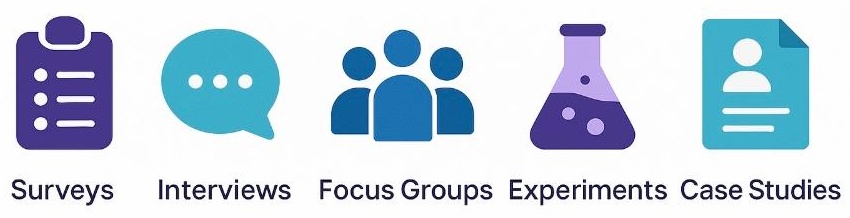
Source: ThesisAI
The 7-Section Methodology Chapter Structure
The methodology chapter follows an inverted pyramid structure — starting broad and getting progressively more specific. This template is adapted from supervisor handbooks at LSE, Manchester, Edinburgh, and KCL for a 3,500-word master’s methodology (AssignmentHelpCenter).
Section 1: Introduction (200–250 words)
Restate your research question and signpost the chapter. This sets the context so the reader knows exactly what methodological decisions are about to be justified. A brief roadmap of how the chapter is organized helps orient the reader.
Pro tip: If your research question has multiple sub-questions, briefly state how each one will be addressed methodologically.
Section 2: Research Philosophy (400–500 words)
This is where you name your philosophical paradigm and justify it. It’s not enough to say “I adopted a positivist approach” — you need to explain why that paradigm fits your research question.
The four primary paradigms and their typical method mappings:
- Positivism → surveys, experiments, statistical tests (best for cause-effect, generalisable findings)
- Critical realism → mixed methods, abductive reasoning (best for mechanisms behind social phenomena)
- Interpretivism → interviews, ethnography, case studies (best for lived experience, meaning-making)
- Pragmatism → mixed methods, action research (best for applied, practitioner research)
Your first methodology sentence should name the philosophy explicitly. Every subsequent paragraph should link back to that choice.
Section 3: Research Design and Approach (500–650 words)
This is the core of your methodology — it’s where you explain your overall strategy. Address these choices:
- Research type: inductive (bottom-up, exploratory) vs. deductive (top-down, confirmatory)
- Research strategy: experimental, case study, ethnography, grounded theory, action research, phenomenology
- Time horizon: cross-sectional (single time point) or longitudinal (multiple time points)
Every choice here must be justified by your research questions. If you chose a case study design, explain why a case study is the right strategy for answering your specific questions.
Section 4: Data Collection Methods (700–900 words)
This is typically your longest section. You’ll cover:
- Data collection instruments: surveys, interview guides, observation protocols, document analysis frameworks
- Sampling strategy: who you studied, how you selected them, and why that strategy fits
- Sampling questions examiners always ask:
- What population are you generalising to? Be specific.
- Why this sample size? For surveys, justify with power calculation; for qualitative, justify by saturation (typically 12–20 interviews per Guest et al., 2006).
- How did you recruit? Name the technique (convenience, snowball, purposive, stratified).
- What are the limitations of this sampling choice? Always address this.
Section 5: Data Analysis Approach (500–650 words)
Examiners expect transparency here. Describe exactly how you prepared and analyzed your data:
- Qualitative: coding framework, thematic analysis process, use of software (e.g., NVivo)
- Quantitative: statistical tests used, assumptions checked, software used (e.g., SPSS)
Be very specific about the analysis techniques. If you used thematic analysis, explain how you coded, developed themes, and ensured reliability.
Section 6: Ethical Considerations (350–500 words)
Ethics deserves significant space — it’s not a formality. Cover:
- Ethical approval reference (“Ethical approval was granted by [committee] on [date], reference [code]”)
- Informed consent process and participant information sheets
- Anonymity and pseudonymisation procedures
- Data security, encrypted storage, retention period
- Right to withdraw
- Risk assessment for sensitive topics or vulnerable populations
Section 7: Limitations and Reflexivity (400–450 words)
Acknowledge openly what your methodology cannot do. This isn’t about beating your study to death — it’s about demonstrating critical understanding. Frame each limitation constructively: “X was a constraint, but Y mitigates it because Z.” In qualitative work, include a positionality statement about how your background may have shaped the research.
Methodology vs Methods
This is the single most common confusion among students, and getting it wrong at the start undermines your entire chapter.
Methodology = the plan (your overall approach and rationale)
Methods = the actions (the specific tools you used to collect and analyze data)
A methodology is the strategic reasoning behind your study — why you chose a particular approach and how your design choices align with your research questions. Methods are the practical techniques: surveys, interviews, observations, experiments, statistical tests, or coding frameworks.
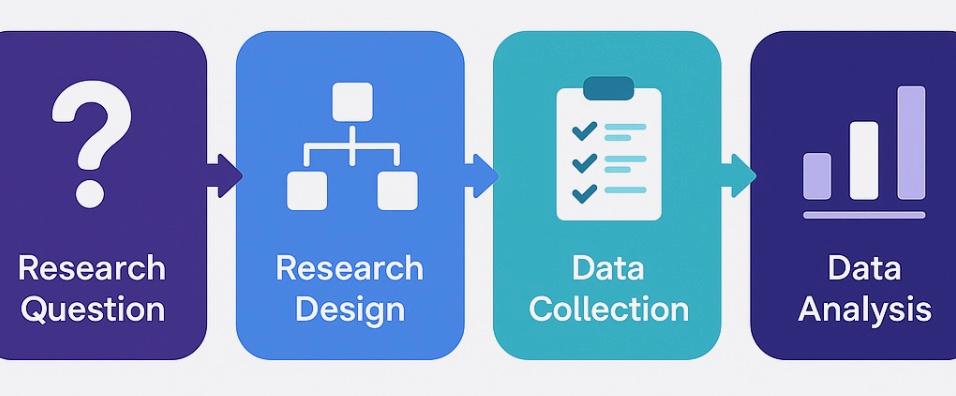
Source: ThesisAI
Think of it this way: methodology is your recipe’s cooking philosophy (why you’re roasting instead of frying), and methods are the actual tools (oven, knife, whisk). Both are necessary, and the relationship between them must be crystal clear.
A list tells a reader what tools were used; a methodology chapter explains the logic connecting research questions, design choices, data, and interpretation (Thesionyx). If you can’t articulate why you chose your methods over alternatives, your methodology chapter is weak.
Qualitative Methodology Chapter
A qualitative methodology chapter foregrounds the paradigm, researcher positionality, and interpretive transparency. Unlike quantitative work, qualitative methodology doesn’t rely on variables and hypothesis testing — it builds from the ground up.
What a distinction-grade qualitative methodology looks like
Here’s an adapted example from a distinction-grade master’s dissertation, inspired by the Manchester Business School approach (AssignmentHelpCenter):
“This study adopted an interpretivist philosophy, grounded in the understanding that social reality is constructed through the meanings participants assign to their experiences (Giardina & Burkait, 2022). Rather than treating knowledge as an objective entity existing independently of the researcher, interpretivism acknowledges that understanding emerges from the interaction between researcher and participants. This philosophical stance aligns directly with the research question, which seeks to explore how undergraduate students experience transitional support at research-intensive universities. A purely positivist approach would have reduced these experiences to measurable variables, stripping away the nuance and context essential to answering ‘how’ and ‘why’ questions (Jansen, 2025). Consequently, semi-structured interviews were selected as the primary data collection method, allowing participants to shape the direction of each conversation while maintaining enough structure to address the research aims.”
Notice four things in this paragraph:
- Explicit philosophy named in the first sentence
- Justification linked directly to the research question
- Alternative philosophy discussed and rejected with reasons
- Seamless bridge to the data collection method
What to include in a qualitative methodology chapter
- Paradigm and positionality: Name your paradigm and include a positionality statement. This isn’t a confessional aside — it’s a methodological disclosure that allows readers to assess how your perspective shaped data generation and analysis. Omitting this is a common weakness that examiners notice (Thesionyx).
- Sampling strategy: Purposive or theoretical sampling should be named and justified. Explain who participated, in what setting, and why those choices were appropriate.
- Data generation: Describe interviews, focus groups, or observations — including how data were recorded, transcribed, and managed.
- Analysis transparency: Detail your coding procedure, theme development, and any software used. Readers should be able to follow the path from raw data to interpretation.
- Trustworthiness: Use credibility, transferability, dependability, and confirmability as qualitative equivalents of validity and reliability. Specify techniques used: triangulation, member checking, audit trails, negative case analysis, or reflexive journaling.
Sample qualitative methods to describe
- Semi-structured interviews (typically 10–25 participants)
- Focus groups (6–12 participants per group)
- Participant observation
- Document or text analysis
- Thematic analysis following Braun and Clarke’s framework (Braun & Clarke, 2022)
- Grounded theory coding (open, axial, selective)
Quantitative Methodology Chapter
Quantitative methodology chapters tend to follow a more standardised sequence, which can give a false sense of security. The structure is familiar, but the justifications still need to be present and specific.
What a distinction-grade quantitative methodology looks like
Here’s an adapted sample inspired by distinction-grade examples:
“This study adopted a positivist philosophy and a deductive research approach, consistent with the goal of testing hypothesized relationships between variables (Saunders et al., 2023). A quantitative methodology was selected because the research questions required measurement of specific constructs and examination of causal relationships using statistical methods. Data were collected through a cross-sectional survey distributed to undergraduate students at [university type]. The survey instrument comprised [number] validated scales adapted from [cited source], with items measured on a 5-point Likert scale. A power analysis conducted using G*Power (v3.1) determined that a minimum sample of 384 participants was required to achieve 95% confidence with a 5% margin of error, given an estimated population exceeding 100,000. Respondents were recruited through stratified random sampling to ensure representation across academic year and faculty.”
What to include in a quantitative methodology chapter
- Research design and variables: Name the design (experimental, quasi-experimental, correlational, survey, cross-sectional) and explain why it suits your research questions. Define independent, dependent, and control variables operationally.
- Hypotheses: State precisely and link to the variables already defined.
- Population and sampling: Describe the target population and sampling strategy (probability or non-probability). Report how sample size was determined — power analysis is the standard in experimental designs.
- Instrumentation, validity, and reliability: Each measure must be described with its psychometric properties. Where established scales are used, cite prior validation evidence. Internal consistency (Cronbach’s alpha) and construct validity should be reported.
- Statistical analysis: Name the tests used and justify their suitability. Acknowledge assumptions (normality, homogeneity of variance, independence) and describe steps taken to verify them. This is a common rejection reason — running ANOVA without checking assumptions costs marks (AssignmentHelpCenter).
Mixed Methods Methodology Chapter
Mixed methods chapters carry the heaviest structural burden because they must satisfy the requirements of both qualitative and quantitative traditions while also justifying the decision to combine them.
Why mixed methods matter (and why they’re frequently rejected)
Mixed methods research is increasingly dominant across disciplines, but here’s the problem: mixed methods without an integration plan is a top examiner rejection reason (UKCGE, 2024). Using both approaches but never showing how they speak to each other is the equivalent of writing two separate chapters side by side.
What you must include in a mixed methods methodology
1. Name the design type explicitly
The four main types and what they mean:
- Convergent parallel: Collect qual and quant data simultaneously, merge at interpretation
- Explanatory sequential: Quant results shape a subsequent qual phase (this is the design in the Manchester Business School example above)
- Exploratory sequential: Qual insights shape a subsequent quant phase
- Embedded: Nest one strand within the other
2. Justify why mixing is necessary
A mixed methods design isn’t justified because you’re interested in both numbers and narratives. You must argue that a single method would be insufficient and explain how combining methods strengthens the inquiry. Ground this in your research questions.
3. Address priority, timing, and integration
These three concepts define mixed methods as mixed rather than merely parallel (Thesionyx):
- Priority: Which strand carries more weight?
- Timing: Are strands conducted concurrently or sequentially?
- Integration: When and how are datasets merged, compared, or connected?
The Integration Checklist (a named mental framework to remember):
- What is the design type? (convergent, explanatory sequential, exploratory sequential, embedded)
- Why is mixing necessary for these research questions?
- Which strand is prioritized?
- What are the timing arrangements?
- At what specific points do the datasets integrate?
- How will integration be achieved? (joining, connecting, or embedding?)
Philosophy note for mixed methods
Critical realism is emerging as a preferred paradigm for mixed methods work, replacing the traditional positivism/interpretivism binary. If you’re using mixed methods, consider whether critical realism better captures the mechanisms your research is investigating.
Ethics and IRB Approval in Your Methodology Chapter
Ethics is not a checkbox — it’s central to methodology credibility. Yet 350–500 words of ethical detail is often condensed into a single sentence (“ethics were approved”), which examiners flag as a major error (AssignmentHelpCenter).
The IRB approval workflow
If your institution requires IRB (Institutional Review Board) approval, here’s the step-by-step process — adapted from Jessica Parker, EdD, who “has reviewed more IRB applications than I can count” (The Dissertation Coach):
Step 1: Determine your review level
- Exempt: Very low risk (anonymous surveys, classroom observation) — reviewed by IRB staff
- Expedited: Minimal risk with identifiable or sensitive data (adult interviews, surveys with contact info) — reviewed by 1–2 IRB members
- Full Board: Greater than minimal risk or vulnerable populations (children, deception, sensitive topics) — reviewed by full committee
Step 2: Complete CITI training
Most universities require the CITI Program’s Human Subjects Research training. Complete this before you start the application and upload your certificate.
Step 3: Gather study materials
Every attachment the IRB will review — consent forms, recruitment emails, survey instruments, interview guides. Many students lose time because they submit before materials are ready. The IRB can’t approve what it can’t review.
Step 4: Write a detailed protocol
Your protocol should explain:
- Study purpose and research questions
- Participant description and recruitment process
- What participants will do during the study
- Confidentiality and data protection methods
Be specific: instead of “I will contact participants via email,” write “I will send recruitment emails using my university account to a list provided by the program director.”
Step 5: Submit and track
- Exempt: 1–2 weeks
- Expedited: 2–4 weeks
- Full Board: 4–6 weeks
Start early. IRB review timelines extend the overall methodology timeline significantly.
Step 6: Respond thoughtfully to feedback
IRB reviewers almost always request modifications. Don’t take it personally — this is part of the process. Address each item clearly, highlight changes in revised documents, and maintain a professional tone.
What to write in your methodology chapter
- “Ethical approval was granted by [School Ethics Committee] on [date], reference [code].”
- Describe the consent process (participant information sheet, consent form, GDPR Article 6 if EU/UK).
- Explain anonymity procedures at storage, analysis, and reporting stages.
- Detail data security (encrypted storage, retention period, deletion plan).
- Include the right to withdraw provision.
- Note risk assessment for sensitive topics or vulnerable populations.
Common Methodology Chapter Mistakes
These seven reasons are compiled from external examiner reports across UK Russell Group universities. If you see any of them in your draft, fix them before submission (AssignmentHelpCenter):
1. Philosophy named but not justified
Labeling yourself “interpretivist” without explaining why your question demands it is insufficient. Fix: end every philosophy paragraph with “This is appropriate because my research question demands X.”
2. Mixed-methods without integration plan
Using both data types but never showing how they speak to each other. Fix: name your integration design (explanatory sequential, convergent parallel) and explain when and how integration happens.
3. Convenience sample with no acknowledgement
Using “students from my campus” without noting the limitation. Fix: name the bias and discuss how it shapes your findings.
4. Statistical tests without assumption checks
Running ANOVA or regression without checking normality or homogeneity of variance. Fix: include an assumptions paragraph in your analysis section.
5. Ethics treated as a formality
One paragraph saying “approval was obtained.” Fix: ethics deserves 350–500 words minimum. Cover approval reference, consent, anonymity, data security, right to withdraw, and risk assessment.
6. Pilot study omitted
Examiners expect a pilot for primary-data research — even a 3-person pilot is enough. Describe what changed as a result of the pilot.
7. No reflexivity
Failing to acknowledge how your background shaped the research. Especially common in qualitative work; this almost guarantees a 60–65 mark cap at master’s level.
Choosing Your Research Philosophy
Your research philosophy is the lens through which you view your topic. It’s what determines everything from how you collect data to how you interpret it.
The Philosophy-to-Methods Map
Here’s a quick reference for matching philosophy to method:
| Philosophy | View of Reality | Typical Methods | Best Fit |
|---|---|---|---|
| Positivism | Single objective reality, measurable | Surveys, experiments, statistical tests | Cause-effect, generalisable findings |
| Critical Realism | Reality exists but is only partially observable | Mixed methods, abductive reasoning | Mechanisms behind social phenomena |
| Interpretivism | Multiple socially constructed realities | Interviews, ethnography, case study | Lived experience, meaning-making |
| Pragmatism | Whatever works to answer the question | Mixed methods, action research | Applied, practitioner research |
| Constructionism | Reality is socially built through discourse | Discourse analysis, narrative inquiry | Identity, language, power studies |
Source: Saunders, Lewis & Thornhill, Research Methods for Business Students, 9th ed. (Saunders et al., 2023)
How to choose your philosophy
- Start with your research question: Does it ask “how/why” (qualitative → interpretivism) or “how much/cause-effect” (quantitative → positivism)?
- Name it in your first methodology sentence: “This research adopts a [philosophy] philosophy because…”
- Justify with your specific question: Don’t just say “interpretivism was chosen because it’s qualitative.” Explain why your question specifically demands that lens.
- Discuss alternatives: Address at least one alternative philosophy and explain why it doesn’t fit your question.
Critical realism note: If your research is mixed methods, critical realism is increasingly preferred over the traditional positivism/interpretivism binary. It acknowledges that mechanisms exist independently of observation but are only partially accessible through participants’ accounts (Bhaskar, 2016).
Software Tools for Methodology Writing
You don’t need to be a tech expert, but knowing which tools fit your methodology saves time and strengthens your analysis.
NVivo (qualitative analysis)
The most popular tool for qualitative data analysis. Use it for:
- Coding and categorizing interview transcripts
- Theme development and memo writing
- Querying patterns across codes
- Visualizing relationships between themes
- Negative case analysis
Tip: If you use NVivo, mention it in your methodology chapter. Specify which version and briefly describe how you used it (e.g., “NVivo 14 was used for inductive coding of interview transcripts, with initial open coding followed by focused coding to develop thematic categories”).
SPSS (quantitative analysis)
The standard for quantitative statistical analysis. Use it for:
- Descriptive statistics (mean, median, standard deviation)
- Inferential tests (t-tests, ANOVA, regression, correlation)
- Assumption testing (normality, homogeneity of variance, independence)
- Data screening and preparation
Tip: In your methodology, specify which tests you ran and briefly note how you checked assumptions. For example: “Descriptive statistics were computed using SPSS v28. Normality was assessed using Shapiro–Wilk tests (p < .05 indicated non-normality). Homogeneity of variance was evaluated using Levene’s test.”
Other useful tools
- Excel — data cleaning, basic descriptive statistics
- G*Power — power analysis for sample size justification
- Reflexive journals — qualitative researchers use these to document positionality and analytic decisions
- Atlas.ti — alternative to NVivo for qualitative coding
AI-Assisted Methodology Writing
Here’s a topic that’s creating debate across higher education: AI in methodology writing. The trend is real, and your institution likely has rules about it.
What AI can (and can’t) do responsibly
AI is appropriate for:
- Structural alignment and checklist automation
- Drafting assistance (turning bullet points into paragraphs)
- Clarifying methodological terminology
- Generating questions for pilot testing
- Formatting and citation management
AI should NOT be used for:
- Designing your research methodology
- Choosing your sampling strategy
- Making philosophical decisions
- Analyzing data
- Interpreting results
The human responsibility rule: Universities emphasize “human-in-the-loop” — AI can format and assist, but research design must remain your responsibility (The Dissertation Coach). If an examiner suspects you used AI for methodology design, the consequences are serious.
Disclosure requirements
Institutions now require explicit acknowledgment of AI use. If you used AI tools, your methodology chapter should include a statement like:
“An AI-assisted writing tool was used to support structural alignment and clarifying methodological terminology. All research design decisions, sampling strategies, and analytic approaches were made independently by the author.”
Bottom line: AI is a drafting assistant, not a research designer. Use it for structure and clarity, not for decisions. Your methodology chapter must reflect your own methodological thinking.
Final Thoughts
Writing a methodology chapter feels daunting until you see it as a logical argument — not a list of tasks. Every section connects to the next, and every choice links back to your research questions. The key is to justify, not describe.
If you’ve read this far, you now know what examiners are looking for, the 7-section structure they expect, the mistakes that lead to rejection, and the workflow for ethical approval. The remaining question is whether you have the confidence to write it — or whether you need some support.
Want expert feedback on your methodology chapter? Our PhD-qualified methodologists review methodology chapters for philosophy justification, sampling clarity, ethics depth, and viva readiness. Get a free consultation and practical guidance tailored to your research goals.
Explore our methodology writing support →
Need help with the next chapter? Once your methodology is solid, the results chapter flows naturally. Learn how to structure your findings section and present data credibly.
Read our guide to writing the results chapter →
Looking for a broader roadmap? Check our complete chapter-by-chapter guide for guidance on every section of your dissertation, from literature review to conclusion.
Not sure whether you should write qualitatively or quantitatively? Our guide to qualitative vs quantitative research methods covers the decision framework, common mistakes, and a practical checklist.
